


 ELT Buzz
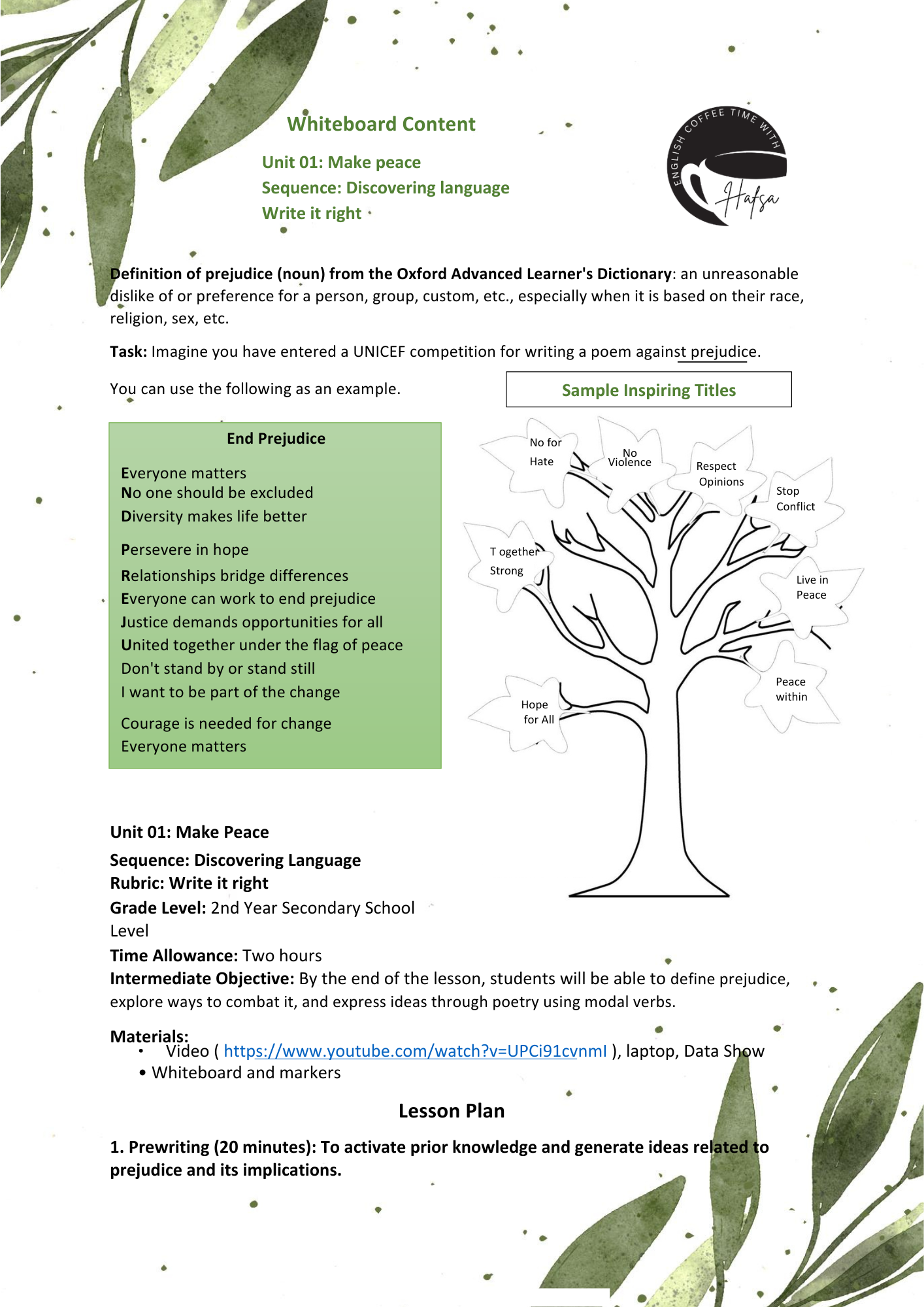
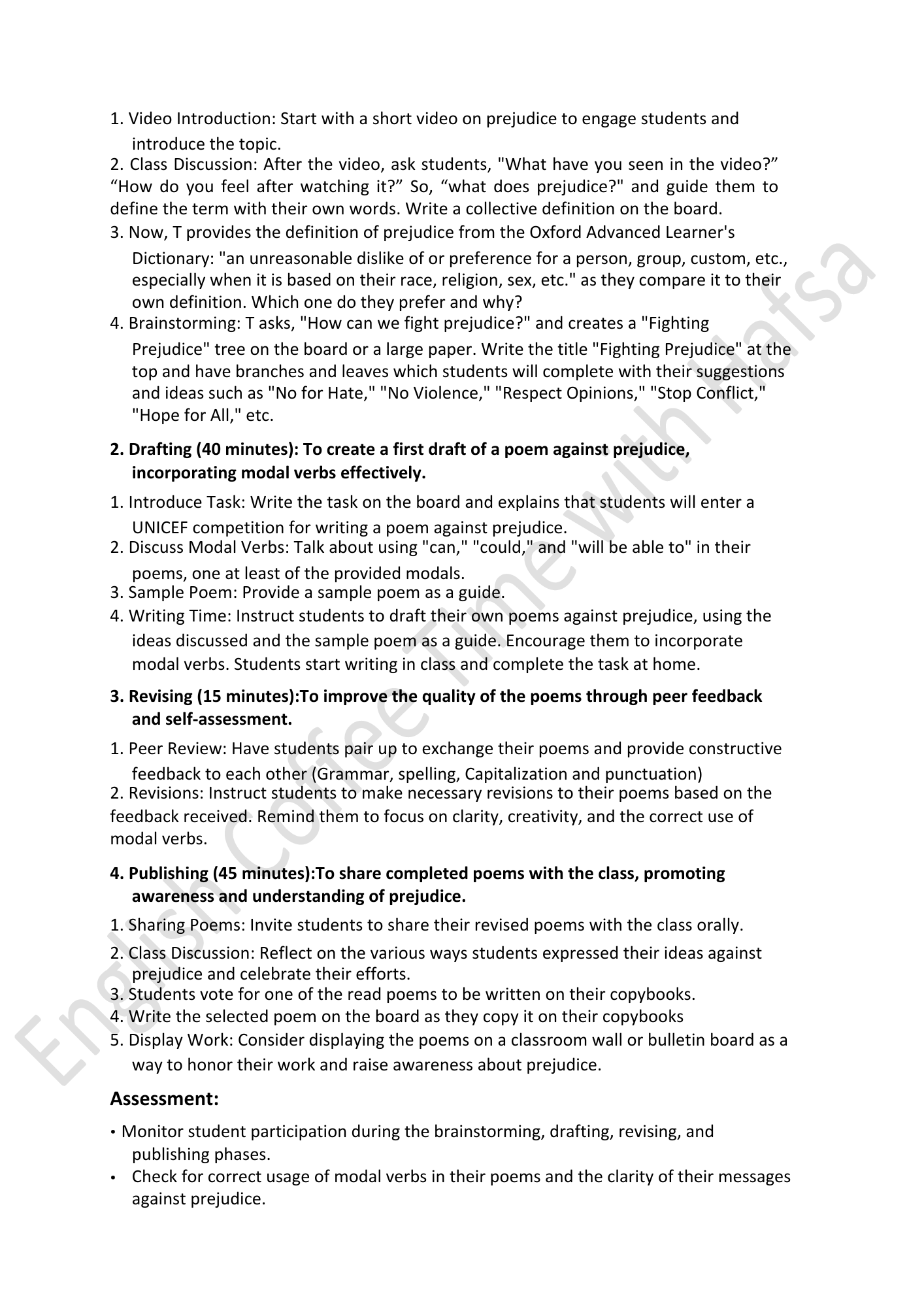
In today’s lesson, we explored the theme of prejudice and how to combat it through poetry. Students watched a video, discussed their thoughts, and defined the term together.
They drafted poems for a UNICEF competition, incorporating modal verbs like can, could, and will be able to. After peer reviews, students shared their work, promoting awareness against prejudice.
Link to download: https://drive.google.com/file/d/1jurIK5ddtSYY9nfKmiNfntlnjVwoNFIr/view?usp=sharing
Video: https://youtu.be/UPCi91cvnmI?si=rG0ziTyaT6M5lx4z

I just got home after an absolutely stunning day with my preservice teachers class. This year, I’m again using an…

Reading is a research supported activity beneficial for student learning - a language or acquiring knowledge.…


Never miss a thing! Subscribe. We'll never spam you!
All the "buzz", news, products, people, resources related to English language teaching
Grace H.
Having students use can, could and will be able to in poems about prejudice gives the language practice a clear purpose. During peer review, did they focus on the modal verbs, the message about prejudice, or both? A small affiliation note: I work on ReceiptBoard, which offers payment receipt templates and a tool for generating receipts.